Coding Tips

Code Review Habits That Turn Average Teams Into Elite Ones

Sophia Carter, Digital Product and Innovation Writer
Sophia Carter
7 min read
Code Review Habits That Turn Average Teams Into Elite Ones

Introduction

Every engineering team reviews code. The difference is that most teams treat it like a checkbox on the way to merging, while a small number treat it as the single highest-leverage activity in their entire development cycle. The gap between these two approaches shows up everywhere: in bug rates, in onboarding speed, in how confidently a team ships on Friday afternoon. When applied as a genuine coding best practice rather than a bureaucratic hurdle, code review reshapes how a team thinks, communicates, and builds software. The habits that separate rubber-stamp reviewers from elite ones are not about talent or tooling; they are specific, learnable behaviors that any team can adopt starting with its next pull request.

Code Review Habits That Turn Average Teams Into Elite Ones

Why Most Code Reviews Fail to Deliver Real Value

The default mode for code review on most teams is shallow. A developer opens a pull request, a teammate skims it, leaves a "looks good to me," and approves. The merge happens, and everyone moves on. This pattern might catch an obvious typo or a missing null check, but it misses the deeper issues: architectural drift, unclear naming conventions, untested edge cases, and logic that works today but creates technical debt tomorrow. The problem is not that teams skip reviews. The problem is that the review itself carries almost no weight.

The Cost of Rubber-Stamping Pull Requests

When reviews are perfunctory, the consequences compound quietly. Bugs reach production that could have been caught in a five-minute conversation. New engineers absorb bad patterns because nobody flagged them. Knowledge silos deepen because the reviewer never actually understood what they approved. According to research on peer code review best practices, reviews that take less than a few minutes almost never surface meaningful defects. The ritual exists, but the value does not.

  • Missed logic errors: Superficial reviews catch syntax issues but rarely catch flawed business logic or incorrect assumptions

  • Knowledge hoarding: When only the author understands a change, the team loses bus-factor resilience

  • Eroded trust: Developers stop investing in review quality when they know nobody reads their feedback

  • Slower onboarding: Junior engineers learn faster from detailed review comments than from any documentation page

What Elite Teams Do Differently From Day One

Teams that get outsized value from reviews treat them as a first-class engineering activity, not an afterthought. They allocate real time for reviews in sprint planning. They rotate reviewers deliberately so knowledge spreads across the codebase. They write review comments that teach, not just correct. These teams understand that a review is not a gate to pass through; it is a conversation that shapes how engineers grow and how code evolves. The shift is cultural before it is procedural.

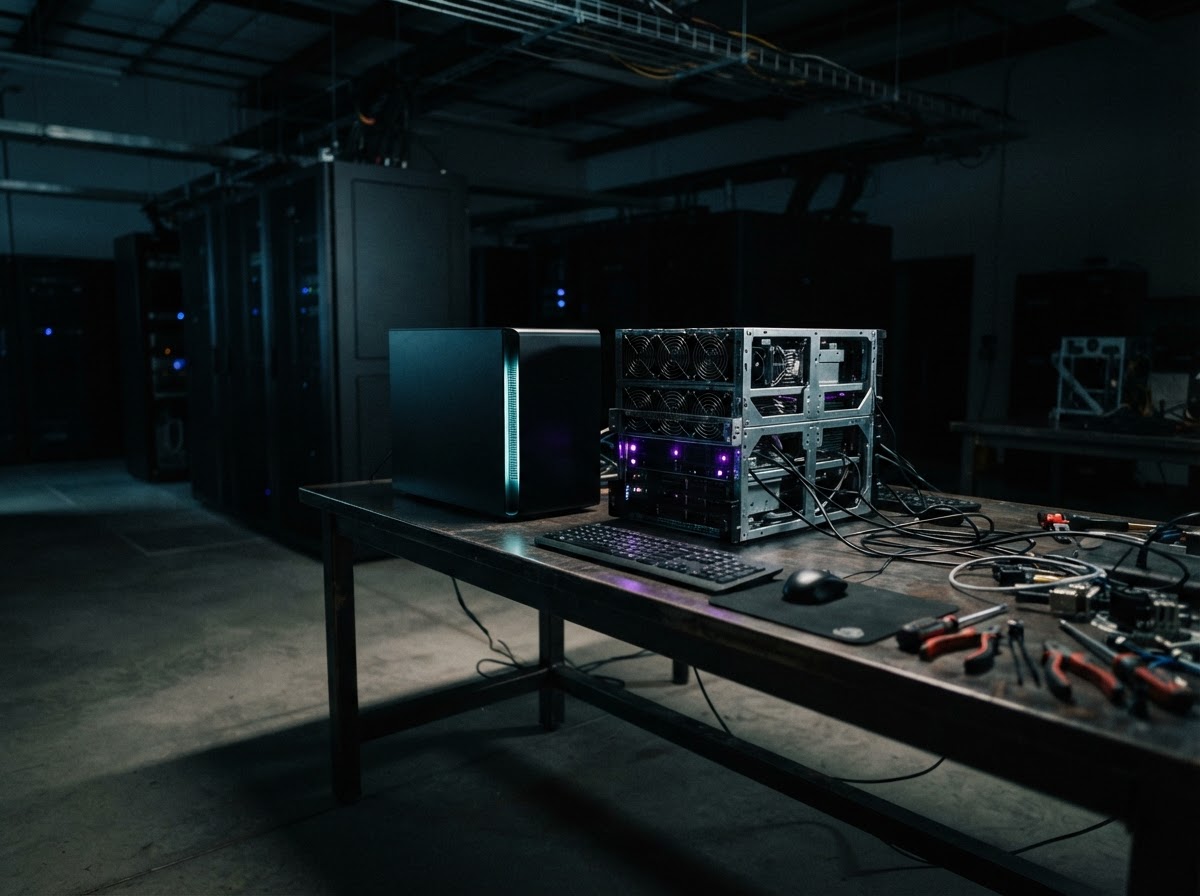
Code review checklist and developer workspace overhead

The Specific Habits That Create Elite Review Culture

Knowing that reviews matter is not the same as knowing what to change. The habits below are tactical, specific, and drawn from patterns observed across high-performing engineering organizations. Each one addresses a failure mode that average teams fall into by default, and each can be adopted without any new tooling or process overhaul.

Review Tests Before Implementation Code

Most reviewers open a pull request and start reading the implementation. Elite reviewers start with the tests. Tests reveal intent. They tell the reviewer what the author believed this code should do, what edge cases were considered, and what scenarios were deliberately left out. If the tests are weak, incomplete, or missing, that is the most important feedback the reviewer can give, because no amount of clean implementation code compensates for untested behaviour.

This habit also forces the author to write better tests in the first place. When engineers know their reviewer will read tests first, testing strategies for developers become a natural part of the workflow rather than an afterthought. The result is a feedback loop where review quality and test quality reinforce each other. Teams that adopt this single habit often see their defect escape rate drop within weeks, because the conversation shifts from "does this code look right" to "does this code prove it works."

Time-Box Reviews and Batch Strategically

One of the most common review failures is letting pull requests sit in a queue for days. By the time someone reviews the change, the author has moved on to something else, context is lost, and the feedback feels like an interruption rather than a collaboration. Elite teams set explicit time expectations: reviews happen within hours, not days. Some teams designate a rotating "review champion" each day whose primary job is clearing the review queue before lunch.

Batching also matters. Code review best practices research consistently shows that review effectiveness drops sharply after 200 to 400 lines of code. When a pull request exceeds that range, reviewers skim instead of reading. The fix is not to review faster; it is to make pull requests smaller. Teams that enforce small, focused PRs get faster reviews, better feedback, and fewer merge conflicts. This is one of the simplest programming productivity tips that actually changes outcomes.

Write Comments That Teach, Not Just Correct

There is a meaningful difference between a comment that says "this should be a const" and one that says "const here signals to the next reader that this value is never reassigned, which makes the function easier to reason about." The first corrects. The second teaches. Elite teams default to the second style because they understand that every review comment is a micro-mentoring opportunity. Over hundreds of reviews, this compounds into a team that shares mental models, not just style preferences.

This does not mean every comment needs a paragraph of explanation. It means the reviewer should ask: "Would a mid-level engineer understand why this matters, or just what to change?" When developers mentor other developers through review comments, the team's collective skill level rises without anyone scheduling a formal training session. DevvPro has explored this dynamic extensively, particularly around how clean code principles are best transmitted through real code conversations rather than abstract guidelines.

Separate Style Feedback From Logic Feedback

Nothing derails a review faster than mixing a comment about indentation with a comment about a race condition. When style nitpicks and logic concerns live in the same thread, the important issues get buried. Elite teams solve this by automating style enforcement entirely through linters and formatters, so that human review time is reserved for what machines cannot do: evaluating design decisions, spotting incorrect assumptions, and questioning whether the approach is the right one. Teams that invest in CI pipelines that catch issues before review free their reviewers to focus on the work that actually requires human judgment.

When style feedback is unavoidable, the best approach is to prefix those comments clearly, something like "nit:" or "style:" so the author knows it is low-priority and can batch those changes without feeling defensive. This small labelling convention reduces friction and keeps the review focused on what matters.

Review as a Team Sport, Not a Solo Activity

On average, teams, one or two senior engineers review everything. This creates a bottleneck and concentrates knowledge in a few heads. Elite teams distribute review responsibility widely and intentionally. Junior engineers review senior engineers' code. Engineers from adjacent teams review changes that affect shared modules. The reason most teams stay stuck at scale is precisely this kind of bottleneck: knowledge does not flow, so capability does not grow.

Rotating reviewers also surfaces blind spots. A backend engineer reviewing a frontend change might ask a naive question that reveals an assumption the frontend team never examined. A newer team member might flag unclear naming that veterans have grown blind to. The goal is not to slow things down with inexperienced reviewers; it is to use diversity of perspective as a refactoring tool for how the team thinks about its own codebase.

Use Reviews to Surface Architectural Drift

Individual pull requests look fine in isolation. But over weeks and months, small deviations from agreed patterns accumulate into an inconsistent codebase where every module works slightly differently. Elite reviewers zoom out. They ask: "Is this approach consistent with how we handle this elsewhere?" and "Are we drifting from the architecture we agreed on, and if so, is that intentional?" This is the difference between reviewing code and reviewing direction.

Tracking these observations is where platforms like DevvPro become a valuable reference point. Reading across topics like debugging techniques and blameless post-mortems builds the kind of cross-cutting awareness that makes architectural review comments possible. The reviewer who reads reviews widely and more deeply.

Conclusion

The habits that turn average review cultures into elite ones are not about adding process. They are about changing what the team pays attention to during a review: tests before implementation, teaching over correcting, architecture over style, and distributed knowledge over concentrated gatekeeping. Every one of these shifts is free, requires no new tooling, and can start with the next pull request. The only prerequisite is deciding that code review is worth doing well.

Explore more software development tips and engineering practices at DevvPro.

Frequently Asked Questions (FAQs)

What are the best coding tips for writing testable code?

Write small, pure functions with explicit inputs and outputs, avoid hidden state, and design modules around interfaces rather than concrete implementations so that dependencies can be swapped during testing.

How to improve coding skills through code reviews?

Actively review code outside your comfort zone, read the reviewer's comments as learning opportunities, and ask clarifying questions when feedback references patterns or principles you have not encountered before.

Why is clean code important for team collaboration?

Clean code reduces the cognitive load for every engineer who reads it, which means faster onboarding, fewer misunderstandings during reviews, and less time spent deciphering intent before making changes.

How do professional developers write code that ships safely?

They combine automated testing, continuous integration, thorough code review, and incremental deployment strategies like feature flags to catch issues at every stage before code reaches production users.

How to avoid common coding mistakes during code review?

Use a structured review checklist that covers edge cases, error handling, test coverage, and naming clarity so that reviewers evaluate each dimension systematically rather than relying on intuition alone.

BG Shape