
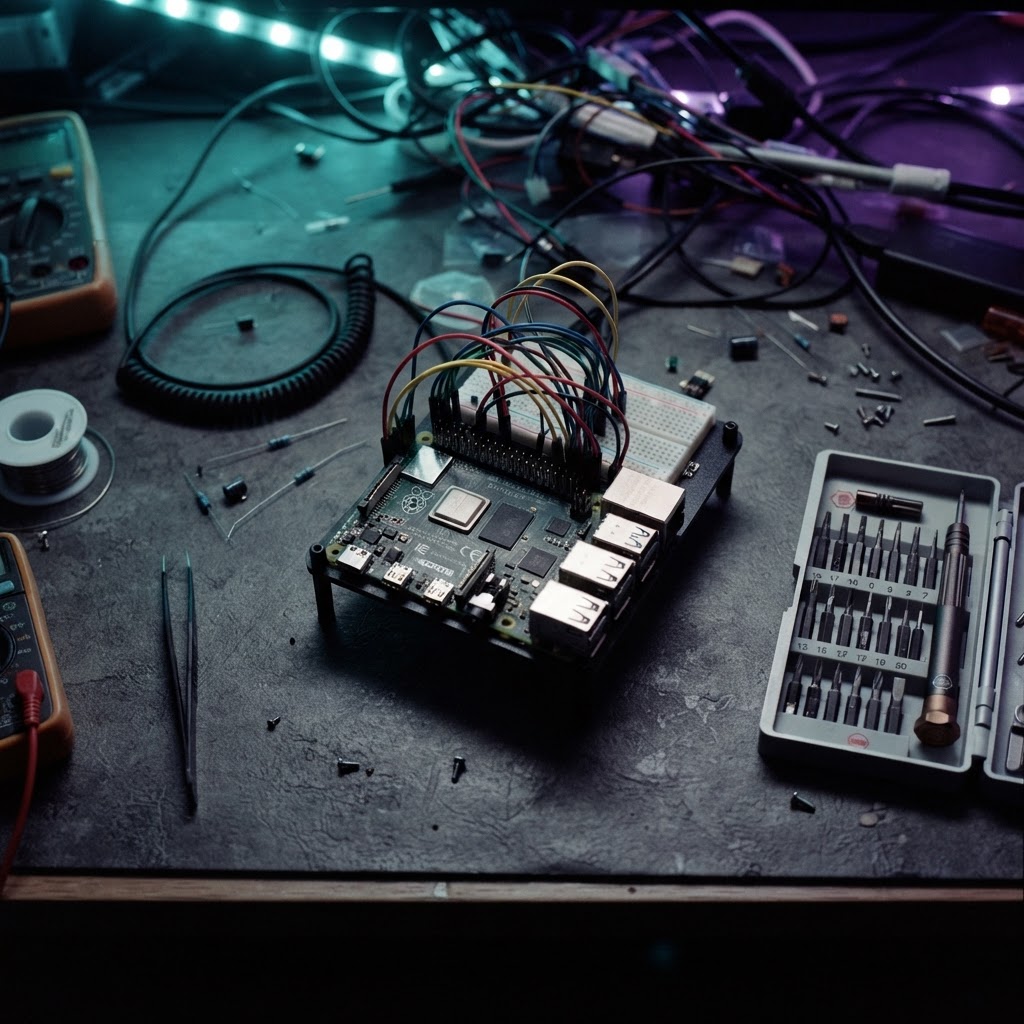
Quick Answer: When should engineering teams move inference to the edge in 2026?
Teams should move inference to the edge when latency budgets fall under 50ms, when privacy regulations penalize sending raw data off-device, or when unit economics make per-request cloud GPU costs unsustainable at scale. The right sequence is to define the latency and privacy budget first, profile on real target hardware early, and commit to a quantization strategy before finalizing the model, since most production systems will land on a hybrid edge-cloud design rather than a pure edge migration.
Introduction
Edge AI is no longer an experimental architecture; it is where serious engineering teams are moving inference in 2026. The reason is simple: latency budgets, privacy regulation, and infrastructure cost have collectively made the round-trip to a cloud GPU untenable for a growing class of production workloads. What used to be a niche choice for constrained devices is now a default design consideration for anything that touches real-time perception, sensitive user data, or intermittent connectivity. This shift is not driven by hype cycles; it is being forced by physics, economics, and regulation converging on the same conclusion. If your system needs sub-50ms responses on a device that cannot always trust its network, the cloud stopped being the correct answer sometime last year.
Key Takeaways:
Edge AI adoption in 2026 is being driven by latency floors, privacy requirements, and unit economics rather than novelty.
Quantization, pruning, and hardware-aware compilation are now table-stakes techniques for shipping models on constrained devices.
Choosing between TensorFlow Lite, PyTorch Mobile, and ONNX Runtime is a hardware and toolchain decision, not a framework preference.
Why Edge AI Became the Default in 2026
For years, the industry treated cloud inference as the natural home for machine learning. That assumption held while models were large, hardware was scarce, and latency budgets were generous. In 2026, none of those conditions are universally true, and engineering teams that ignore the shift are increasingly shipping architectures that fight against their own constraints.
The Latency, Privacy, and Reliability Squeeze
The move toward edge intelligence systems is best understood as three simultaneous pressures that used to be treated as separate concerns. When you look at where production workloads are actually failing SLOs, the same three issues surface repeatedly, and they are the ones cloud inference is structurally worst at solving. Recent research on real-time processing at the edge makes the case that latency and privacy are now first-class architectural constraints rather than optimizations.
Latency floors: Interactive perception, robotics, and AR workloads have hard sub-50ms budgets that a network round trip cannot meet reliably.
Data gravity and privacy: Regulatory regimes in Europe and North America increasingly penalize sending raw sensor or biometric data off-device.
Reliability under partition: Devices in vehicles, industrial sites, and remote deployments cannot depend on a network that is often the least reliable part of the stack.
Cost per inference: At scale, GPU inference bills grow linearly with usage in a way local silicon does not.
Energy and thermals: Backhaul, encryption, and remote compute add up to more watts than a well-optimized on-device model.
The Economics That Finally Tipped
What changed in the last 18 months is that on-device NPUs became genuinely capable, and model compression research finally caught up to production needs. Small, well-quantized transformers now run acceptably on hardware that costs a fraction of a cloud GPU-hour, and they do so without a per-request fee. When you combine this with the operational overhead of running a fleet of inference servers, the tradeoff analysis flips for a growing class of workloads. This is one of the sharper system design tradeoffs engineers are working through this year.
The Engineering Tradeoffs of Moving Inference Off the Cloud
Deciding to run inference at the edge is not a single decision; it is a cascade of them. Each choice constrains the next, and getting the order wrong is how teams end up with a model that runs beautifully on their workstation and unusably on the target device.
Model Compression and Quantization Are Non-Negotiable
On-device machine learning techniques begin with the assumption that your model does not fit. Quantization from FP32 to INT8, or increasingly INT4, is the first lever, and it typically buys a 4x reduction in memory footprint with modest accuracy loss when done with quantization-aware training. Structured pruning and knowledge distillation come next, especially for teams working with tinyML for embedded systems where the memory ceiling is measured in kilobytes rather than gigabytes. A useful survey of compression strategies, following the same quantization-aware training guidance Google maintains for TensorFlow Lite, covers the accuracy-latency curves in more depth than most teams internalize before committing to a target device.

Hardware Acceleration Is Where the Real Choices Live
Edge AI hardware acceleration is fragmented in a way cloud GPUs are not. NPUs from Qualcomm, Apple, MediaTek, and a growing set of RISC-V-based accelerators each expose different operator sets, quantization schemes, and memory hierarchies. This is where teams underestimate the porting cost, and where solid performance bottleneck analysis stops being optional. A model that hits 30 FPS on one NPU may fall to 6 FPS on another because a single unsupported operator forces a fallback to the CPU.
The Tooling Landscape: Frameworks, Runtimes, and Deployment
The framework decision for edge AI in 2026 is less about preference and more about which hardware you have committed to and which model architectures your team already trains against. Picking the wrong runtime early is a decision you will pay for every quarter.
TensorFlow Lite vs PyTorch Mobile vs ONNX Runtime
Each of the three major runtimes has a distinct center of gravity, and understanding that shape matters more than any benchmark. A recent framework comparison lays out the operator coverage and delegate stories in useful detail, but the summary is that no single runtime wins across all targets. Teams choosing a runtime are effectively choosing which hardware they will find easy to support and which they will fight for the next two years, which is why this belongs in the same category as any other major tech stack selection conversation.
Deployment, Observability, and the CI Story
Deploying a model to a fleet of heterogeneous devices is closer to firmware engineering than backend deployment, and teams coming from a pure cloud background consistently underestimate this. You need versioned model artifacts, rollback paths, per-device telemetry, and drift detection that survives intermittent connectivity. Strong observability and telemetry practices are what separate teams that ship edge AI once from teams that operate it for years. DevvPro's editorial position on this has been consistent: the deployment story is where most edge AI projects quietly fail, not the model itself.
Practical Guidance for Engineering Teams Moving to the Edge
If you are evaluating an edge-first design in 2026, the sequencing of decisions matters more than any individual choice. Teams that skip the profiling step and commit to a target device based on datasheet numbers alone almost always end up re-architecting mid-project.
A Sane Sequence for Edge AI Adoption
The order below is opinionated on purpose. It is drawn from watching teams succeed and fail with the same underlying hardware, and it maps to the broader architectural patterns that hold up in distributed intelligence work. Start with the constraint, not the model.
Define the latency and privacy budget first: Everything else is downstream of what the device must guarantee under worst-case conditions.
Profile on the actual target hardware early: Datasheet TOPS numbers rarely predict real-world throughput on your specific operator mix.
Commit to a quantization strategy before finalizing the model: Quantization-aware training is significantly cheaper than post-hoc rescue work.
Design for hybrid inference, not pure edge: Most production systems benefit from a fallback path to a cloud model for rare or high-value cases.
Build the observability layer before the second deployment: You cannot debug drift on a fleet you cannot see.
Where the Cloud Still Wins
Edge AI is not a replacement for cloud inference; it is a specialization of it. Large frontier models, batch analytics, and workloads that benefit from cross-user context still belong in the cloud, and the emerging pattern is collaborative inference between small on-device models and larger cloud counterparts. This hybrid design is where most production systems will land in 2026, and it is why DevvPro has been consistent in framing edge AI as a shift in the balance of the stack rather than a wholesale migration.
Conclusion
Edge AI in 2026 is not a rejection of the cloud; it is a rebalancing forced by latency physics, privacy regulation, and unit economics that cloud inference cannot solve on its own. Teams that sequence their decisions correctly, defining the constraint first, profiling on real hardware early, and building observability before the second deployment, avoid the re-architecture cycles that plague teams chasing datasheet numbers. The frameworks and runtimes matter less than the discipline behind the decisions. Want more grounded engineering perspective on distributed systems and inference tradeoffs? Explore more on DevvPro for deep dives into architecture, tooling, and the logic behind modern development practices.
About the Author
Ethan Walker is a Content Creator at DevvPro, covering edge AI architecture, model compression, and the engineering tradeoffs behind moving inference off the cloud. His work focuses on sequencing decisions correctly before committing to hardware or a framework.
Frequently Asked Questions (FAQs)
What is edge AI?
Edge AI is the practice of running machine learning inference directly on local devices rather than sending data to a cloud server, reducing latency, preserving privacy, and removing dependency on network connectivity.
Why is edge AI becoming standard in 2026?
Edge AI is becoming standard because on-device NPUs have become genuinely capable, model compression techniques have matured, and cloud GPU inference costs scale linearly with usage in a way local silicon does not.
Which framework should I choose for edge deployment?
The choice depends on your target hardware and existing model architecture rather than framework preference alone, since TensorFlow Lite, PyTorch Mobile, and ONNX Runtime each expose different operator support and delegate behavior per device.
Does edge AI replace cloud inference entirely?
No, edge AI is a specialization rather than a replacement. Large frontier models and batch analytics still belong in the cloud, and most production systems in 2026 use a hybrid design that falls back to cloud inference for rare or high-value cases.
What is the biggest mistake teams make when adopting edge AI?
The most common mistake is committing to a target device based on datasheet TOPS numbers instead of profiling on the actual hardware early, which forces costly re-architecture mid-project.