

Introduction
Every engineering team has a war story about a technology stack that seemed perfect on paper but collapsed under real-world pressure. Maybe it was a framework that fell out of active maintenance six months after launch, or a database that buckled the moment traffic spiked beyond projections. Choosing a tech stack is not a shopping exercise where you pick the most popular items off a shelf. It is a set of compounding bets on your team's velocity, your product's constraints, and the ecosystem's trajectory over the next several years. The difference between a stack that accelerates your roadmap and one that quietly sabotages it often comes down to how rigorously you interrogated those bets before writing the first line of code.
The Real Cost of Getting Your Tech Stack Wrong
Most conversations about choosing a modern tech stack revolve around features, benchmarks, and popularity rankings. Those inputs matter, but they obscure the deeper issue: a stack decision is a constraint that shapes every future engineering choice. Pick the wrong database, and you inherit schema migration nightmares. Choose an immature framework, and you spend sprint cycles patching gaps instead of shipping features. The cost is rarely a single dramatic failure; it is a slow erosion of technical debt that compounds quietly until your team can no longer iterate at speed.
Why Teams Default to Familiarity Over Fit
Developers tend to reach for what they already know. A team fluent in a JavaScript tech stack will default to Node.js on the backend, even when a Python tech stack or a Go service would handle the workload more efficiently. Familiarity reduces onboarding friction, and that is a real advantage. But when it becomes the primary criterion, teams optimize for comfort rather than for the problem at hand. The result is a stack shaped by inertia, not intent.
Comfort bias: Teams select tools they have used before, regardless of whether those tools fit the current project's constraints
Hype drift: New frameworks get adopted because they are trending, not because they solve a validated bottleneck
Resume-driven development: Individual contributors push for tools that look good on a CV rather than tools that serve the product
Switching cost blindness: The pain of migrating later is abstract at decision time, so it receives too little weight
The Compounding Effect of Early Decisions
A stack chosen in week one shapes what is possible in month twelve. Your developer toolchain grows around it. Your CI/CD pipelines, testing strategies, and deployment patterns all crystallize around the original choice. When that choice was careless, every downstream system inherits its weaknesses. This is why treating stack selection as a throwaway decision is so dangerous: you are not just picking a language, you are choosing the physics of your entire engineering operation.
A Decision Framework That Actually Holds Up
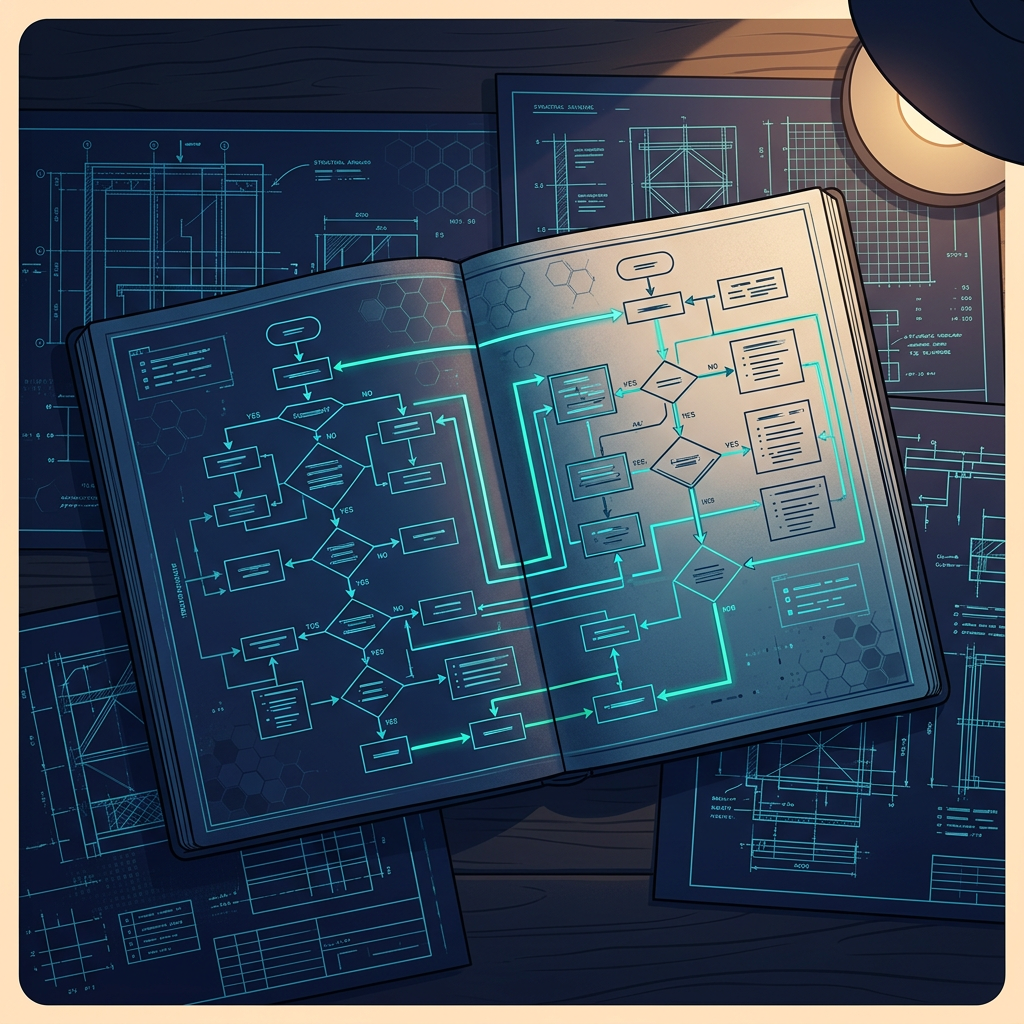
Instead of starting with "what is trending," start with a set of constraints specific to your project. A repeatable framework for evaluating any backend technology stack or frontend technology stack should walk through five dimensions: team capability, scalability demands, ecosystem health, operational complexity, and long-term maintainability. None of these dimensions exists in isolation, and the best stack decisions acknowledge the trade-offs between them rather than pretending a single tool wins everywhere.
Evaluating Team Fit and Scalability Together
Team fit is not just about what languages your engineers already know. It is about what they can realistically master within the project timeline and whether the learning curve creates an unacceptable delay to the first delivery. A team of three that has never touched Rust will not ship a production-ready Rust service on the same timeline as a Go service they already understand. At the same time, scalability demands deserve honest assessment. If your product roadmap includes real-time data processing for thousands of concurrent users, a technology that handles concurrency poorly will become a wall you cannot engineer around. Framework benchmarks offer a useful starting point for understanding raw throughput, but they never tell the full story. Real-world performance depends on your specific data patterns, caching strategy, and infrastructure choices.
Scalability also means thinking about microservices architecture versus monolith trade-offs. Startups that prematurely decompose into microservices create operational overhead that a small team cannot sustain. The best tech stacks for startups are often monoliths that are structured well enough to be decomposed later, not distributed systems from day one. Teams that stay stuck at scale frequently got there by over-engineering their architecture before they had the traffic or team size to justify it.
Ecosystem Health as a Leading Indicator
A framework's ecosystem tells you more about its future than any feature comparison chart. Check how active the core maintainers are, how often major versions ship, and how responsive the community is to security advisories. An open source project's health can be measured by commit frequency, issue resolution time, and the ratio of contributors to open bugs. A technology with a vibrant ecosystem means you will find libraries, integrations, and answers to obscure problems when you need them. A technology with a stagnant ecosystem means you will be writing those libraries yourself.
Consider how tech trends shaping how engineers build are influencing adoption curves. Languages and frameworks that attract sustained investment from major companies tend to have longer, more predictable support windows. That does not mean you should only pick tools backed by large corporations, but you should be honest about the risk profile when choosing a community-maintained tool for a mission-critical system. Evaluating ecosystem maturity is especially critical when conducting a tech stack comparison between options that seem equivalent on the surface.
Putting the Framework Into Practice
Frameworks are useless without execution. The following sections translate the five evaluation dimensions into concrete steps you can run against any stack decision you are facing right now. Whether you are spinning up a greenfield project or inheriting a codebase that feels like it was assembled by committee, these checkpoints give you a structured way to validate or challenge your current direction.
Running a Stack Audit on Your Current Project
If you already have a codebase in production, your first step is not to pick a new stack. It is to audit the one you have. Map every technology in your current stack to a simple scorecard: how well does it handle current load, how easy is it to hire developers who know it, how active is its ecosystem, and how much operational burden does it create? Be ruthless about separating tools that are genuinely working from tools you have simply learned to tolerate. Developers often confuse familiarity with effectiveness. A team that has spent two years building workarounds for a poorly structured codebase may not realize how much velocity they are leaving on the table.
This audit also reveals hidden dependencies. You might discover that your deployment pipeline is tightly coupled to a specific container runtime, or that your testing framework only supports one version of your primary language. Understanding these coupling points is essential before evaluating alternatives. DevvPro regularly covers the kind of container engine decisions that surface during exactly this kind of audit.
Making the Final Call Without Second-Guessing
Decision paralysis kills more projects than bad technology choices. Once you have evaluated team fit, scalability needs, ecosystem health, operational complexity, and maintainability, you have enough signal to commit. Write an Architecture Decision Record (ADR) that captures why you chose what you chose, what alternatives you considered, and what conditions would trigger a re-evaluation. This document becomes your insurance policy against future second-guessing. Composable tech stack strategies are gaining traction precisely because they allow teams to swap individual components without a full rewrite, giving your ADR a practical escape hatch.
The goal is not to pick a perfect stack. Perfect stacks do not exist. The goal is to pick a stack where you understand the trade-offs, where the risks are calculated rather than accidental, and where the team can execute confidently from day one. Resources like DevvPro exist to help engineers think through these decisions with the depth they deserve, moving beyond surface-level comparisons to the kind of reasoning that holds up under production pressure. Engineers who build advanced habits around decision-making tend to produce systems that age gracefully rather than systems that demand emergency rewrites.
Conclusion
The best tech stack for web development is not the one with the most GitHub stars or the flashiest homepage. It is the one your team can operate, scale, and maintain without accumulating crippling debt along the way. A repeatable evaluation framework that weighs team fit, scalability, ecosystem maturity, operational cost, and long-term maintainability will serve you on every project, regardless of which languages or frameworks are trending at the moment. Treat the decision as a first-class engineering artefact, document it, revisit it when conditions change, and resist the urge to chase novelty for its own sake.
Explore more practitioner-driven engineering thinking at DevvPro, where every article is built for developers who take their craft seriously.
Frequently Asked Questions (FAQs)
What is a tech stack?
A tech stack is the combination of programming languages, frameworks, databases, and tools used together to build and run a software application.
How to choose a tech stack for a new project?
Evaluate your team's existing expertise, your product's scalability requirements, the health of each technology's ecosystem, operational complexity, and long-term maintainability before committing.
What makes a good tech stack?
A good stack aligns with your team's capabilities, handles your projected workload without heroics, and has an active ecosystem that ensures ongoing support and library availability.
MERN vs MEAN stack: which should you pick?
MERN (MongoDB, Express, React, Node.js) is generally favored for projects requiring a rich, component-driven frontend, while MEAN (swapping React for Angular) suits teams that prefer a more opinionated, batteries-included frontend framework.
Why is tech stack important for startups?
Startups operate under extreme resource constraints, so a poorly chosen stack amplifies hiring difficulty, slows iteration speed, and increases the likelihood of a costly rewrite before product-market fit is achieved.