

Introduction
Every experienced engineer has faced the moment: a new role, a new team, and a production system nobody fully understands anymore. The original authors have moved on, the documentation is either stale or absent, and the business logic is buried under years of accumulated decisions. Inheriting a legacy codebase is not a rare edge case. It is a near-universal rite of passage in professional software development. The real question is not whether it will happen, but whether you will have a sequenced plan ready when it does, or waste weeks thrashing in unfamiliar territory without traction.
Inheriting a Legacy Codebase: What to Do First
Orienting Yourself Before Writing a Single Line
The first instinct when dropped into an unfamiliar legacy codebase is to start reading code. Resist it. Reading files at random without context is the fastest way to burn mental energy with zero return. Instead, the opening days should be dedicated to building a map of the system: its boundaries, its dependencies, and the critical paths that keep the business running. This orientation phase separates developers who gain traction quickly from those who spend weeks confused.
Map the System Boundaries and Entry Points
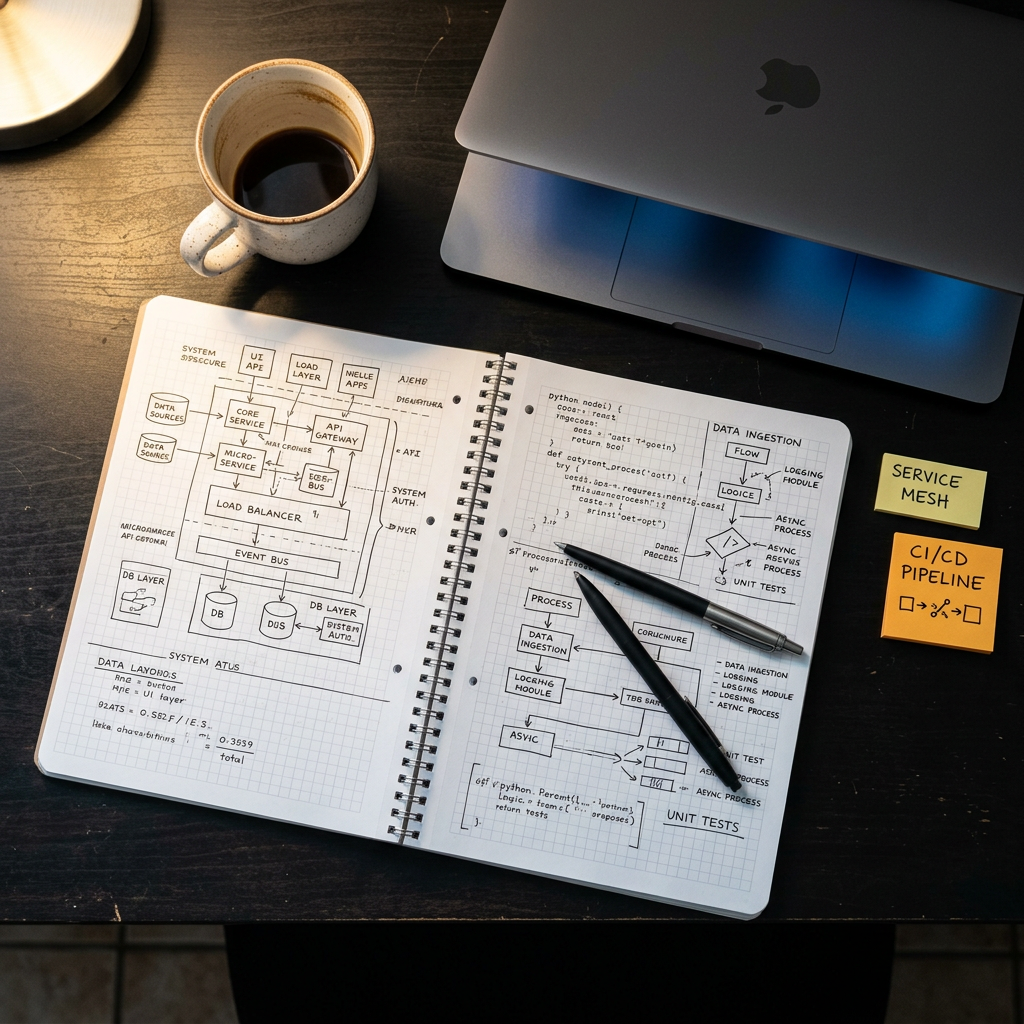
Before diving into any module, establish what the system actually does from the outside in. Identify the primary entry points: API endpoints, scheduled jobs, message consumers, and user-facing surfaces. Trace one complete request from ingress to database and back. This single exercise reveals more about the architecture than hours of file browsing.
Deployment artifacts: identify what gets built and shipped, whether containers, lambdas, or monolithic JARs
External integrations: catalog every third-party API, database, queue, and cache the system touches
Configuration surface: locate environment variables, feature flags, and runtime settings that alter behavior
Traffic patterns: check logs or monitoring dashboards to understand which paths carry the most load
Talk to People Before Reading Code
Documentation in legacy systems is notoriously unreliable, but institutional knowledge still lives in the people around the codebase. Product managers, support engineers, and long-tenured teammates can explain why certain modules exist and which areas break most often. A study on developer onboarding in legacy projects found that structured knowledge transfer from existing team members dramatically reduces ramp-up time. Even a 30-minute conversation with the on-call engineer who handled last month's incidents can give you a better mental model than a week of solo exploration.
Building Confidence Through Testing and Controlled Changes
Once the initial map is in place, the next phase is about building confidence in your understanding, not by rewriting anything, but by proving you can modify the system safely. This is where working with legacy code shifts from passive observation to active engagement. The goal is to establish a feedback loop that tells you when you break something, long before it reaches production.
Establish a Test Baseline
Most inherited codebases have sparse or unreliable test coverage. Before making any changes, assess what exists. Run the full test suite, if there is one, and note what passes, what fails, and what gets skipped. Flaky tests are common in older systems, and distinguishing a real failure from a pre-existing flake saves hours of unnecessary investigation.
If coverage is minimal, do not attempt to retroactively test the entire system. Instead, write characterization tests around the specific code paths you need to modify. A characterization test captures the current behavior of a function, even if that behavior is technically wrong. Its purpose is not to validate correctness but to detect unintended change. This approach to legacy code testing is one of the highest-leverage activities in the early weeks because it gives you a safety net without requiring you to understand every line of code first. Tools for static code analysis can also surface risky areas and common antipatterns without running anything.
Make a Small, Safe, Observable Change
The single best way to learn a legacy system is to change it. Pick something small: a log message improvement, a minor configuration fix, or a simple code cleanup that does not alter behaviour. Push it through the full deployment pipeline. This exercise teaches you more about the build system, the CI/CD process, the deployment cadence, and the monitoring stack than any README could.
Pay attention to what happens after deployment. Does a dashboard update? Do logs reflect the change? Is there an alerting threshold that fires? Understanding the observability layer is critical when working with legacy code because many older systems rely on tribal knowledge of which metrics matter. If no observability exists, adding basic logging or tracing to a high-traffic path is one of the most valuable early contributions you can make. Developers who treat technical debt as a design choice rather than an accident will recognize that observability gaps are themselves a form of accumulated debt.
Deciding What to Fix, What to Leave, and What to Isolate
After the first couple of weeks, a pattern emerges: you start seeing problems everywhere. Inconsistent naming, duplicated logic, unused imports, dead code paths, and questionable architectural decisions. The temptation to fix everything is strong. It is also the fastest route to destabilizing a production system. The discipline of working inside a legacy codebase is knowing when to act and when to leave well enough alone.
The Maintenance vs. Rewrite Decision
Legacy code maintenance vs rewrite is one of the most consequential debates in software engineering, and the answer almost always favors incremental improvement. Full rewrites carry enormous risk: they take longer than estimated, they lose embedded business logic that nobody documented, and they often reproduce the same problems in a new language or framework. The history of software modernization is littered with rewrite projects that never shipped.
Instead, prefer targeted refactoring. Identify the modules that change most frequently and cause the most incidents. Those are the areas where refactoring legacy code delivers the highest return. Stable modules that nobody touches, even if they look ugly, are low priority. The ugliness is not the problem. The risk of change without understanding is. DevvPro has covered this tension extensively, and the core insight holds: prioritize refactoring where it reduces future cost, not where it satisfies aesthetic preference.
Isolate Before You Improve
When a section of the codebase is both critical and fragile, the safest first move is isolation, not improvement. Wrap the problematic module behind a clean interface. Introduce a boundary that lets you replace or modify the internals later without affecting callers. This is the strangler fig pattern applied at the module level, and it is one of the most reliable engineering practices for legacy system modernization.
Isolation also pays dividends when onboarding future team members. A well-defined boundary means the next engineer who inherits this code does not need to understand the messy internals to work safely around them. You are not just solving today's problem. You are reducing the cognitive load for everyone who comes after you. Resources like DevvPro regularly explore these patterns for teams working through legacy code dependencies and migration strategies at scale.
Conclusion
Inheriting a legacy codebase does not have to be a chaotic scramble. By mapping boundaries first, establishing test baselines second, and making deliberate decisions about what to fix versus what to isolate, developers can gain real traction in weeks rather than months. The best legacy code best practices are not about heroic rewrites or clever hacks. They are about patience, sequencing, and building confidence through controlled, observable progress.
Explore more practitioner-driven engineering guides at DevvPro.
Frequently Asked Questions (FAQs)
How to work with legacy code?
Start by mapping the system's boundaries and critical paths, then build characterization tests around the areas you need to modify before making any changes.
Why is legacy code difficult?
Legacy code is difficult because it accumulates undocumented business logic, outdated patterns, and implicit dependencies that make the cost of change unpredictable.
Can you test legacy code?
Yes, characterization tests can capture existing behavior without requiring full understanding of the code, giving you a safety net for future modifications.
How to reduce technical debt in legacy systems?
Focus refactoring efforts on the modules that change most frequently and cause the most incidents rather than trying to clean up the entire codebase at once.
Legacy code maintenance vs rewrite, which is better?
Incremental maintenance and targeted refactoring almost always outperform full rewrites because rewrites risk losing embedded business logic and consistently exceed time estimates.