
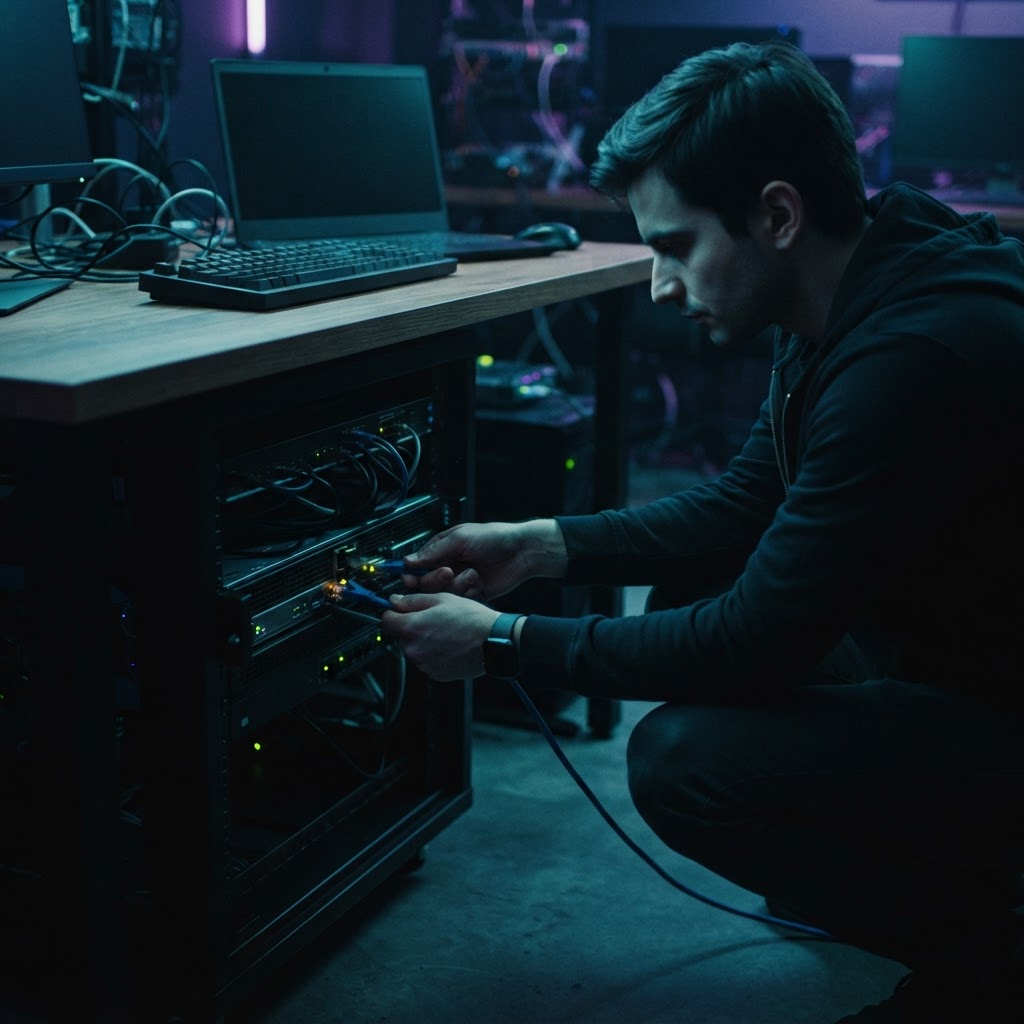
Quick Answer
MCP servers are becoming shadow IT because developers can connect powerful AI clients to internal tools and data faster than security, platform, and procurement processes can see them. The right response is not a blanket ban: treat every MCP server as a production integration surface with explicit ownership, scoped access, reviewable code, and revocable credentials.
Introduction
An MCP server can turn a local script, repository, database, or SaaS API into an LLM-accessible tool with very little ceremony. That convenience is exactly why unmanaged adoption is spreading through engineering teams. A developer solves a real workflow problem in an afternoon, then quietly creates a new pathway between an AI client and sensitive systems. The dangerous part is not the protocol itself, but the invisible trust boundary it creates.
Key Takeaways:
MCP servers need the same ownership and access controls as any internal integration.
Local convenience becomes enterprise risk when credentials and tool permissions are unmanaged.
A governed catalog is safer than forcing developers back to brittle one-off integrations.

Why MCP Servers Become Shadow IT So Quickly
The model context protocol removes a painful integration step: instead of building a custom connector for every AI workflow, developers expose tools through a common client-server contract. That is useful engineering, not reckless behavior. But when the connection is created outside normal review paths, an internal convenience tool becomes untracked infrastructure with access to systems nobody has formally approved.
Convenience beats governance when the workflow is blocked
Developers reach for MCP when they need an AI client to inspect documentation, query a service, search tickets, read source code, or execute a narrow operational task. The path feels harmless because the server may run locally and serve one person, yet the data flow can still cross from a privileged environment into a model context window and back into an action-capable tool.
Fast setup: A small server can expose an existing API quickly.
Hidden credentials: Tokens often live in local environment files.
Implicit trust: Clients may invoke tools without meaningful permission prompts.
Unclear ownership: Personal repositories rarely have operational maintainers.
Local servers still create enterprise attack paths
Connecting local data to LLMs via MCP is not isolated merely because the process runs on a laptop. The server may read credentials, source code, logs, issue trackers, or internal documentation, while the client can send tool results into a broader AI workflow. This is why developer tools that use AI need governance proportional to what they can read, transmit, and change, not based on whether they were installed through corporate procurement.

MCP Integration Architecture Needs a Real Trust Model
A sound MCP integration architecture starts by treating the AI client, MCP server, identity provider, target system, and model provider as separate trust zones. MCP client-server communication is just a transport and tool-discovery pattern; it does not supply a complete authorization strategy, audit model, or data classification policy on its own.
Map the request path before approving the server
Every review should answer five practical questions: who launches the client, where the server runs, which credentials it uses, what the server can invoke, and where outputs are retained. The same workflow can be low-risk when it searches public documentation and high-risk when it reads production incident data or can mutate cloud resources.
The comparison below separates unmanaged experimentation from a governed deployment. It is not a maturity exercise for its own sake: the operational difference is whether a team can identify and shut down a risky connection before it becomes an incident.
Decision area | Unmanaged local MCP server | Governed MCP deployment |
|---|---|---|
Ownership | Individual developer or small team | Named service owner and platform contact |
Credentials | Local tokens and environment files | Central secrets management and rotation path |
Permissions | Broad API access is common | Least-privilege scopes by tool action |
Change control | Repository changes may be invisible | Reviewed releases and rollback procedure |
Auditability | Partial local logs | Centralized event records for tool calls |
The governed path preserves developer speed when the platform makes approved patterns easy to reuse. A ban leaves the demand intact and pushes the work back into private repositories, copied tokens, and unobservable scripts.
Integration patterns for AI should place authorization at the boundary where a tool call becomes a real system action. Do not let the model decide which permissions it deserves; bind each exposed capability to a known identity, a narrow scope, and an auditable policy.
Tool schemas are part of your attack surface
Building custom MCP servers means designing tool names, input schemas, validation rules, and error behavior that a model can use reliably. A vague tool such as “run_query” invites scope creep, while a deliberately narrow tool can constrain behavior to a specific read operation or approved action. Good API design that supports agents makes unsafe requests difficult to express in the first place.
What a Sane MCP Adoption Policy Looks Like
A practical MCP implementation guide should establish a paved road, not a permission queue. Teams need a standard server template, a registration path, managed secret injection, observability, and a clear rule for which data classes can enter model prompts. Without those defaults, every developer invents their own controls under delivery pressure.
Classify servers by capability, not popularity
Start with an inventory that distinguishes read-only knowledge tools from servers that write data, execute commands, deploy code, or touch customer records. Require a named owner and repository for each shared server, then add stronger review for higher-impact capabilities. This approach is particularly relevant to agentic AI deployments, where tool use can expand the consequences of an otherwise ordinary prompt.
Do not mistake model safety settings for access control. A client can be manipulated through untrusted content, a server can mishandle parameters, and a legitimate tool can be used in an unsafe sequence. Security review must therefore cover the whole request chain rather than asking only whether the selected model is approved.
Make secure behavior the fastest developer path
Provide approved server templates with structured logging, parameter validation, explicit allowlists, and short-lived credentials where the identity system supports them. Add dependency review to the release process, because MCP packages, SDKs, and copied examples are part of the deployment surface. Controlled software development and change management should be commensurate with the risk introduced by AI-enabled tooling.
Maintain an AI-specific software bill of materials for models, datasets, and dependencies, and require human review before generated code introduces components or containers into the environment. The AI security actions also emphasize continuous monitoring, clear fallback procedures, and human oversight for critical decisions; they note that AI risks and actions are expected to evolve over the next 10 years. Those controls matter because a server that works correctly in a demo can still fail under changed permissions, corrupted context, or a compromised dependency.
DevvPro’s coverage of AI security checks points to the broader lesson: developer tooling deserves the same adversarial thinking applied to production services. The server is not just a convenience adapter once it carries authority from a model-facing client into an internal system.

Conclusion
MCP adoption is a governance problem because developers are solving genuine integration friction before enterprise controls catch up. Inventory existing servers, classify them by what they can access or change, and move useful ones onto a supported path with owners, scoped credentials, logs, and reviewable releases. Treat local experimentation differently from shared operational tooling, but do not confuse local execution with low risk. Find more engineering analysis at DevvPro for practical perspectives on building AI-enabled systems without giving up control.
Frequently Asked Questions (FAQs)
What is an MCP server in software engineering?
An MCP server in software engineering is a service that exposes data sources or tools through the Model Context Protocol so an AI client can discover and invoke them, while the server remains responsible for validating inputs, applying authorization, and interacting with the target system.
How does the Model Context Protocol work?
The Model Context Protocol works by allowing a client to connect with a server, discover available tools or resources, and request structured operations, while the server translates those requests into controlled calls against local files, APIs, databases, or other connected services.
Why should developers use MCP servers?
Developers should use MCP servers when a reusable, well-scoped interface can replace repeated custom integrations, because the protocol can reduce connector work while preserving a clear place to enforce validation, permissions, logging, and lifecycle ownership.
How to secure an MCP server implementation?
To secure an MCP server implementation, enforce least-privilege credentials, validate every parameter, separate read and write tools, log tool invocations, review dependencies, and ensure every shared server has an accountable owner who can revoke access or roll back changes.
What are the limitations of MCP servers?
The limitations of MCP servers include incomplete governance by default, variable client behavior, new dependency exposure, prompt-driven misuse of powerful tools, and the need for teams to design identity, authorization, monitoring, and failure handling outside the protocol itself.
Is MCP protocol ready for production use?
MCP protocol is ready for production use only when the surrounding implementation meets production requirements, including stable ownership, controlled releases, narrow permissions, auditable actions, data handling rules, incident response procedures, and ongoing monitoring for changing model and dependency behavior.
About the Author
Priya Nair is a Senior Software Engineer and Product Builder focused on scalable developer tools, engineering culture, and product decisions that affect real delivery teams. Her writing connects system design and security choices to the day-to-day realities of building software developers can trust and use.