

Quick Answer
Buy a managed tracking platform when carrier coverage and operational reliability matter more than owning every delivery component. Build only when shipment events are central to your product and your team can operate secure ingestion, replay, observability, and recovery workflows continuously.
Introduction
A webhook-based tracking system is usually the right mechanism for real-time shipment visibility because it receives carrier updates as events occur instead of repeatedly asking for them. The difficult work is not exposing an HTTP endpoint. It is ensuring every event is authentic, durable, idempotent, traceable, and recoverable when upstream providers retry or downstream services fail. This is where a simple integration becomes a distributed-systems responsibility.
Key Takeaways:
Accept quickly, persist durably, and process shipment events asynchronously.
Idempotency prevents duplicate carrier updates from corrupting shipment state.
Buying reduces integration maintenance, while building preserves workflow control.
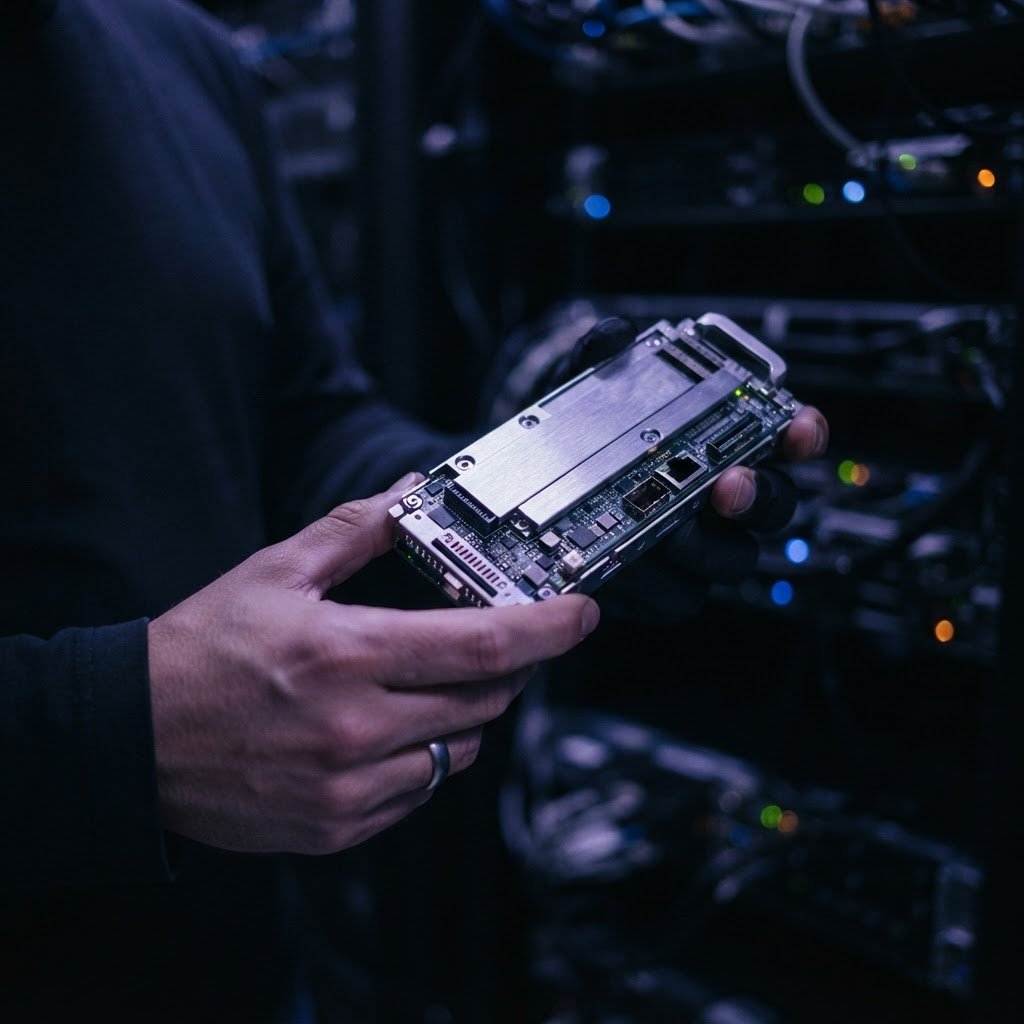
Webhook architecture explained for shipment tracking
Shipment tracking needs an asynchronous event-driven architecture because carriers, warehouses, and fulfillment partners emit updates on their own schedules. A delivery exception can arrive after a customer-facing status has changed, and the same event can be delivered again after a timeout. Platforms like Truxweb illustrate the buyer-facing payoff of this architecture: its dashboard pushes automated shipment alerts for dispatch, pickup, and delivery so a logistics manager can react before a missed pickup becomes a customer issue.[1] Sound shipping software architecture requires treating incoming events as immutable facts, then derives the current shipment state from controlled processing.
What a production event path must do
Implementing webhooks in backend systems starts with separating receipt from business processing. The public endpoint should validate the request, record the raw event and return a successful response quickly; workers can then normalize statuses, update shipment records, notify customers, and trigger exception workflows without holding the sender's connection open.
Authenticate: Verify signatures before accepting a payload.
Timestamp: Reject stale requests to reduce replay exposure.
Persist: Store raw payloads before downstream processing.
Deduplicate: Enforce an idempotency key per event.
Observe: Correlate delivery attempts with processing outcomes.
Limit subscriptions: Subscribe only to handled event types.
Security and failure handling are architectural requirements
Secure webhook handling for developers requires a per-provider secret, canonical signature validation, constant-time comparisons, and replay controls. The webhook security guidance recommends a distinct secret for each endpoint, so one compromised integration does not expose every destination.[2] Duplicate-safe processing is mandatory because providers can redeliver events after delivery failures or timeouts.
A dead-letter path matters just as much as the happy path. When a payload cannot be parsed, cannot map to a shipment, or repeatedly fails a dependent action, preserve the event with its failure reason and make it replayable after a code or data correction. Do not silently discard an event merely because a notification service or customer database was temporarily unavailable. Publishers should also use per-subscriber delivery limits, exponential backoff with jitter, maximum retry counts, and endpoint disabling for destinations that keep failing for days, as outlined in the webhook security guidance.

Build vs buy for webhook shipment tracking
The build-versus-buy decision is not about whether your team can create an endpoint. It is about whether the organization should own carrier-specific normalization, credential rotation, event replay, support escalation, outage diagnosis, and the constant churn of shipping logistics APIs. A custom implementation creates control, but it also turns external delivery behavior into an internal operations burden.
Where the real engineering cost appears
Building is justified when your shipment lifecycle is a differentiating domain model, such as specialized freight milestones, proprietary fulfillment rules, or workflow orchestration that a generic provider cannot represent. It also makes sense when product requirements demand direct event ownership across systems already designed for supply chain architecture. Otherwise, most teams underestimate the long tail: new carrier payloads, changed status codes, malformed requests, endpoint migrations, and support cases involving events that were received but not applied.
The comparison below focuses on operational ownership rather than invented price estimates, because published pricing and feature parity vary by provider and contract.
Decision area | Build in-house | Buy a tracking platform |
|---|---|---|
Carrier normalization | Your team maps carrier statuses and payload changes. | Provider maintains its supported carrier mappings. |
Webhook reliability | Your team owns queues, retries, replay, and alerting. | Provider operates its delivery and event infrastructure. |
Workflow control | Custom state models and downstream actions. | Constrained by the platform's event model and configuration. |
Integration maintenance | Internal responsibility for each connected partner. | Provider absorbs covered integration maintenance. |
Commercial detail | Engineering cost is internal and variable. | Pricing is commonly custom or undisclosed publicly. |
Buying moves common integration risk outside your application boundary, while building retains the freedom to model unusual freight, warehouse, or customer-service workflows. Neither choice removes the need for internal idempotency, monitoring, and a clear source of truth for shipment state.
How to scale without losing events
Scaling webhook infrastructure means decoupling request intake from processing and allowing workers to scale independently from the public receiver. Put a durable queue or log behind the ingress service, partition work by shipment identifier when ordering matters, and apply backpressure when downstream systems cannot keep up. Event-driven architecture research explains why event-driven systems separate event production from consumers, while requiring explicit ownership of ordering, retries, and eventual consistency.[3] For a second perspective, this event-driven architecture documentation offers relevant guidance for designing distributed webhook consumers.[4]
Use a stable event identifier when the sender provides one; otherwise, derive a duplicate key from the provider, shipment reference, event type, event timestamp, and payload fingerprint. Record both the delivery attempt and the resulting state transition. That distinction lets engineers explain whether a carrier never sent an update, the receiver rejected it, or the application processed it but later displayed stale state.
Use a decision framework, not a preference
Choose custom logistics software when tracking events drive proprietary operational decisions and the team already has mature platform practices for on-call response, security review, schema evolution, and message replay. Choose a platform when the priority is dependable visibility across external carriers and the product gains little from maintaining connectors. For teams building direct partner connections, freight API integration should be assessed separately from customer-facing tracking because commercial freight milestones often require a different data model.

Conclusion
A production shipment webhook system is an event-processing service, not a route handler. Build when differentiated shipment logic is worth owning the carrier edge cases, operational load, and incident response that accompany it. Buy when normalized tracking data and maintained integrations are more valuable than custom control. For engineering teams weighing that boundary, the decision belongs in the reliability and product costs that appear after the first webhook succeeds.
Need a sharper architecture decision? explore the engineering guides for practical systems-design analysis.
Frequently Asked Questions (FAQs)
What is a webhook and how does it work?
A webhook is an HTTP callback in which a provider sends an event payload to a registered endpoint when a shipment status changes, allowing the receiving application to react without repeatedly requesting status data.
How do you secure a webhook endpoint?
You secure a webhook endpoint by validating a provider signature against the raw request body, checking a timestamp or nonce for replay protection, using unique secrets per endpoint, and rejecting requests that fail validation before processing.
Why are webhooks preferred over API polling?
Webhooks are preferred over API polling when timely updates matter because the sender pushes a status event when it occurs, which reduces repeated requests and avoids choosing an arbitrary polling interval that can still miss freshness expectations.
How do you handle high-volume webhook traffic?
You handle high-volume webhook traffic by acknowledging validated requests quickly, placing events into durable asynchronous processing, scaling workers independently, preserving ordering where required, and applying backpressure before dependent systems become unavailable.
How do you handle webhook failures and retries?
You handle webhook failures and retries by recording each delivery and processing outcome, using idempotency keys to absorb duplicates, routing unrecoverable events to a replayable dead-letter workflow, and alerting on persistent provider or consumer failures.
What does a standard webhook architecture look like?
A standard webhook architecture includes a protected ingress endpoint, signature verification, raw-event persistence, a durable queue, idempotent workers, a shipment state store, observability records, and a controlled replay path for corrected failures.
Sources
- Automated shipment alerts — truxweb.com ↩
- Webhook Security — cheatsheetseries.owasp.org ↩
- Event-driven architecture research — alochana.org ↩
- Event-driven architecture documentation — eajournals.org ↩
About the Author